Wednesday, February 13, 2013

Los viajes de Maximiliano en México by Konrad Ratz and Amparo Gómez Tepexicuapan (Comentarios de C.M. Mayo en la presentación)

Amparo Gómez Tepexicuapan
From the CONACULTA website
about the presentation
Herewith (below), my comments for the presentation of Konrad Ratz and Amparo Gómez Tepexicuapan's Los viajes de Maximiliano en México (Maximilian's Travels in Mexico) in Mexico City's Chapultepec Castle yesterday. A magnificent, meticulously researched and beautifully designed book, Los viajes de Maximiliano en México is a major contribution to our understanding of not only his government but the period, and as such it deserves to be in any and every collection of Maximiliana.


Presentación del libro
Martes 12 de febrero, 2013
Castillo de Chapultepec

Comentarios de C.M. Mayo
Querida Amparo; compañeros comentaristas; Señoras y Señores:

Antes que nada, quisiera agradecer la muy amable invitación para participar en la presentación de este magnífico libro, sin duda en un inmejorable escenario. Para mi tiene un doble significado este evento: primero, es un tributo a los autores, a quienes respeto profundamente en lo profesional y personal, y aprovecho este instante para mandarle mis mejores deseos al Dr Ratz , quien no ha podido estar presente aquí por motivos de salud; y segundo, por la profundidad con que se aborda el tema mismo del libro.

Como dice el refrán, nunca es tarde si la dicha es buena. Pero esto no quita que hubiera apreciado inmensamente haber tenido a mi disposición este libro, investigado meticulosamente y documentado e ilustrado maravillosamente, cuando estaba en el proceso de escribir mi novela.

Como saben todos quienes se meten a estudiar este periodo, el Segundo Imperio o Intervención francesa, fue un episodio de la historia mexicana verdaderamente transnacional: ahí tenemos al archidique austriaco, el ejército francés, tenemos empresarios y banqueros ingleses, norteamericanos, todo tipo de mexicanos, tanto condes como indígenas y belgas y húngaros y hasta la reina Victoria y el Papa... Para poder investigar a fondo, uno tiene que leer cartas, informes y libros no solamente en castellano, francés y alemán, sino también en inglés y en ocasiones sería deseable—y en mi casi no fue posible— en portugués, italiano o húngaro. Aparte de esta Torre de Babel, las costumbres, filosofias e incentivos de tan diversos protagonistas, tanto mexicanos como extranjeros, son muy dificil de tomar con seriedad. Nada más para dar un ejemplo entre cientos, para quizá cada uno nosotros, nacidos en el siglo XX, ciudadanos de una república, ya sea Mexico o en mi caso, los Estados Unidos, cuando leemos el tomo escrito por Maximiliano y Carlota durante su traslado a México, nuestra inclinación natural es de reír. Estoy hablando del Reglamento y ceremonial de la corte en el cuál se especifica hasta el color de los calcetines de los meseros, a quién le toca un cojín de terciopelo en tal ceremonia y a quién no. No obstante, en el contexto del mundo de esta pareja, es decir, el Europa de aquel entonces en donde los rituales monárquicos, con su énfasis en demostrar y hasta intimidar con su riqueza, orden y poder, dicho reglamento tiene un perfecto sentido.

A esta complejidad más que bizantina de este periodo añadimos el hecho de que Maximiliano y Carlota viajaban casi constantamente. . . .  CONTINUAR

Tuesday, February 12, 2013

Los viajes de Maximilian (Maximilian's Travels)

UPDATE
Read my comments about this book, given for its presentation on Feb 12, 2013.


On Tuesday February 12, 2013 @ 6:30 pm
I will be on the panel presenting the new book by Konrad Ratz and Amparo Gómez Tepexicuapan,
Los viajes de Maximiliano en México
Chapultepec Castle, Mexico City
(In Spanish, entrada libre)


Tuesday, December 11, 2012

My Recollections of Maximilian by Marie de la Fere


A free book-- download it here. It's been in rough form on-line for sometime but I've updated the introduction and formatted it as an ebook. (Tip: If you're using an iPad, click on "open in iBooks.")

From the new introduction:

It was the distinguished historian of Mexico, Robert Ryal Miller, who told me about this circa 1910 English language handwritten manuscript long-languishing in the Bancroft Library at the University of California, Berkeley. Very generously, as was his way, he wrote to me, knowing that I was doing archival research for my novel, The Last Prince of the Mexican Empire, and recommended that I look it up on my next visit to the Bancroft.

There is always something magical about touching old paper, running one's finger along the faded ink, but it turned out that I had to read "My Recollections of Maximilian" on microfiche-- reeling a tape through a cranky old machine in a dark room. The handwriting appeared to be that of an older person, elegant but cramped, smallish, and set down in a first draft, as if jotted one afternoon on whatever paper might have been handy, and only after being repeatedly pressed by some younger friend. In places, here a word, there a sentence fragment, were impossible to make out. But reading it was well worth the trouble, for, among so many other things, it gave me insight into the Mexican monarchists' passionate feelings for their unlikely emperor,
Maximilian von Habsburg.

Younger brother of Austria's Kaiser Franz Josef, Maximilian was shanghaied by pie-in-the-sky promises into serving as the puppet emperor of Louis Napoleon's so-called Mexican Expedition. For Mexicans, this Austrian with the beautiful uniforms and splendid red beard who ended his young life in 1867 before a firing squad in Querétaro, shouting, "Viva México!" is a figure of endless fascination, ridicule, scholarly reconsidersations, gossip, paintings, operas, musicals, movies, and, of course, novels. Adding to the beguilement, his wife, the arrogantly beautiful Carlota—granddaughter of France's King Louis Philippe (the one who abdicated in 1848), daughter of King Leopold of Belgium, sister of Leopold II (of Congo fame), and first cousin to Queen Victoria— went raving mad in the Vatican and spent the rest of her long life—she died in 1927— sequestered in a castle in Belgium. 
>>READ MORE

Tuesday, November 27, 2012

New Book by Konrad Ratz and Amparo Gómez Tepexicuapan

Leading historians of Mexico's Second Empire or French Intervention, Konrad Ratz and Amparo Gómez Tepexicuapan, have just published an invaluable resource for anyone studying the period-- or writing a novel: the Spanish translation of their work originally published in German, Los viajes de Maximiliano en México (1864-1867) with a fine introduction by Salvador Rueda Smithers, director of Mexico's National Museum of History (Chaputlepec Castle).

Here's hoping it sees publication in English. As I wrote about the original German edition, Ein Kaiser unterwegs:

Maximilian accepted the throne of Mexico without ever having seen it-- he was crowned Emperor in 1864 in his residence in Trieste (then part of Austria, now Italy). Once he arrived in Mexico, however, he made strenuous efforts to tour the country and get to know its people, its moneymen and other key players, its natural wonders and, of course, the silver mines. As anyone who tries to write about Mexico's Second Empire soon discovers, Maximilian's (and his consort Carlota's) incessant travels make any chronology of the period headscratchingly complex. 
Enter the indispensable Ein Kaiser unterwegs: Die Reisen Maximilians von Mexiko 1864-1867 nach Presseberichten und Privatbriefen* by Konrad Ratz and Amparo Gómez Tepexicuapan (Vienna: Böhlau, 2007), which details Maximilian's multitude of journeys in Mexico during the Second Empire. These include his inaugural tours of 1864 and then 1865 to the silver mines; 1865 and 1866 to Cuernavaca; October 1866 through January 1867 to Orizaba and back to the capital; and the final journey to Querétaro in 1867. 
A hardcover edition with many rare photographs, documents, and new maps, a bibliography, and an index of biographical names, this is an essential addition to any collection concerning the period.  


Here's my translation of the Spanish edition's back cover:

Maximilian's travels in Mexican territory have been the object of speculation but not any in-depth research. The authors of this book aim to fill this gaps and present historical evidence of the liberal "coup d'etat" Maximilian did not achieve in nearly three months of his first tour as emperor. In detailed analysis, they also examine the activities of his second, third, and fourth tours. 
Maximilian traveled the territory of his Empire intending to govern in situ. For the first time, this work shows his activities, ideas, decrees, by a day-by-day description of the receptions, and his meetings with political figures, as well as his programs of visits to schools and other public institutions.

>>Get your copy here:
Fondo de Cultura Económica
Consejo Nacional para la Cultura y las Artes (CONACULTA)
ISBN 978 607 516 052 8

UPDATE
Read my comments given for this book's presentation.


Tuesday, September 25, 2012

The Celtic Cross, Gift from the Pope to Maximilian

With thanks to my Austrian correspondent Herbert Brindl, and many apologies for my terrible delay, a link to page of (alas, old) news of the auction of the cross given by the Pope to Maximilian. It's quite something, no? Anyone aiming to a make a movie starring the ex-Archduke had better feature this very luxurious object. Apparently, according to the auction house, Maximilian wore it on all state occasions.

PS The Pope's wedding gift to Maximilian and Carlota of an inlaid table is on display at Miramar Castle.

I'll be back posting something about the two (yes, count 'em) editions of Maximilian and Carlota's book of protocol... anon....

Tuesday, August 7, 2012

Amor por México, Maximiliano y Carlota, an Alebrije by Raúl Santos Ramírez

This is a post I meant to make back in (gulp) October of 2010. Thanks to sharp-eyed Rubén Pacheco, some fun snaps from the monumental alebrijes show in Mexico City, of the work titled "Amor por México, Maximiliano y Carlota." What's an alebrije? I think of them a combination of Chinese dragon and a display piñata or maybe a sculpture and an intricately hand-made candy-wrapper. This is a playful interpretation of Maximilian and Carlota's love for Mexico by Raúl Santos Ramírez. Here is a translation of the artist's own description of the work:

An homage to the foreigners who love our country and have taken root in our culture. 
Emperor Maximilian von Habsburg is personified by a hawk, which represents his Austrian origin and with a glimpse of a crown to invoke his renouncing the crown in order to govern our country. His clothing merges with a charro's suit, a tradition in which he was a pioneer, and the long roots are the deep love he felt for Mexico. 
Empress Carlota Amalia of Belgium, is embodied as a fairy, which symbolizes the madness she suffered until her death and the hope she had of being together with Maximilian. 
Three hearts, the largest symbolizing Mexico and the way in which both sank roots in a brief time in our country, the hearts in the hands  represent the love story between them  and the heart formed by the wings the hope for this nation's prosperity.

Monday, July 23, 2012

Justo Armas

My fellow Mexico aficionado, author Michael Hogan, sent me this curious link he came upon about Justo Armas. Fun reading for anyone intrigued by the many Maximilian legends of yore.

Tuesday, July 17, 2012

La Sociedad and La Biblioteca Miguel Lerdo de Tejada

La Sociedad was the newspaper of Mexico's Second Empire. For my research for my novel, I had the privilege-- as can you, should you visit Mexico City-- of reading the originals in the Biblioteca Miguel Lerdo de Tejada. (I had to use gloves and wear a mask...)

This truly extraordinary library is run by Mexico's Ministry of Finance (SHCP) and it is open to the public. Watch this brief overview and introduction by director Juan Manuel Herrera:


Tuesday, June 26, 2012

El Cerro de las Campanas

The Cerro de las Campanas (Hill of the Bells) was where Maximilian was executed in June of 1867-- 45 years ago. Pictured left, as I snapped it in the local museum, is the coffin used to transport his body from there to the embalmer's.

>>Mexican writer Araceli Ardón, who lives in Querétaro, posted the essay, "Cerro de las Campanas," on her blog.

>>Click here for a few photos of the Cerro de las Campanas and the chapel to Maximilian's memory.

>>A translation from the Hungarian about the fiasco of the embalming is here.

>>Lots more about Maximilian on the dedicated webpage here.

>>"From Mexico to Miramar or, Across the Lake of Oblivion," my award-winning essay about a visit to Maximilian's (yes) Italian castle, originally published in the Massachusetts Review, is available here.

I aim to post more regularly on the coming weeks. Several interesting items are awaiting...

Tuesday, June 5, 2012

José Luis Blasio Papers in Mexico City

The author of the dishy-- and classic-- memoir, Maximiliano Intimo, José Luis Blasio served in Mexico as a secretary to Maximilian von Habsburg, and in Europe 1866, to the Empress Carlota, witnessing many of the most dramatic events of the Second Empire / French Intervention. I was delighted to learn that his invaluable archive now has a home at the Centro de Estudios de Historia de México Carso in Mexico City.

Tuesday, January 24, 2012

New in Kindle: El último príncipe del Imperio Mexicano and "From Mexico to Miramar or, Across the Lake of Oblivion"

The Spanish edition of my novel, The Last Prince of the Mexican Empire (Unbridled Books, 2009), as El último príncipe del Imperio Mexicano, beautifully translated by Mexican poet and novelist Agustín Cadena, is now available on Kindle.

>>Watch the trailer:


Also now available on Kindle from Dancing Chiva is my long essay about a visit to Maximilian's castle in Italy, "From Mexico to Miramar or, Across the Lake of Oblivion" by C.M. Mayo, originally published in the Massachusetts Review.

Light posting on this blog for a spell because I've been busy with the publication of my trtanslation of Francisco I. Madero's Spiritist Manual and a new podcasting project that launched this month. But I will be posting here again soon; I still have a lot of research to share.

P.S. If I owe you an e-mail, my apologies, but please know I do read my e-mail and, though behind, I am doing my best to catch up.

Tuesday, November 22, 2011

Dr Konrad Ratz Event Today in the National Palace, Mexico City

Dr Konrad Ratz has translated a profoundly important work for understanding Maximilian's Mexican adventure and unfortunate end: The reports of the Prussian Ambassador to Mexico, Baron von Magnus, to Otto von Bismarck.

Those who are aficionados of the period will know that Baron Magnus was the only diplomat who witnessed Maximilian's execution in 1867.

Dr Ratz found Magnus's reports in the archives in Berlin and has translated them into Spanish as El ocaso del Imperio de Maximiliano visto por un diplomático prusiano: Los informes de Anton von Magnus a Otto von Bismarck, 1866-1867.

It has been published by Siglo Veintiuno Editors and there will be a formal presention TODAY at 17:00 hrs in the Biblioteca Homenaje a Benito Juárez, Palacio Nacional (free and open to the public).

Dr Ratz is also the editor and translator of several (yes several) other vital and paradigm-changing works, including Tras las huellas de un desconocido and Correspondencia inédita entre Maximiliano y Carlota.

Tuesday, October 25, 2011

A Letter of Warning from Don Pedro Montezuma XV to Maximilian, 1864

Some people have written to me asking about the letter I quote in my novel, The Last Prince of the Mexican Empire, from Don Pedro Montzeuma XV, the sole legitimate descendant of the Aztec emperor, to Maximilian von Habsburg in 1864. Here is the excerpt in the novel-- my translation, edited:

French cannon have cowed some into submission; once tranquility reigns, however, there will rise up all of a sudden a terrible counter-revolution. . . Your Highness has been too precipitous in accepting the Mexican throne . . . Those who today form the regency are of the most impious stripe . . . depraved evildoers, usurpers, they rob the Treasury, they rob even the Holy Church . . . they will supplant Your Highness perhaps after a tragic end.

The actual letter is in Maximilian's archive, and a reprint can be ordered from the Austrian Staatsarchiv in Vienna. There is also a copy of this letter in the Library of Congress's Kaiser Maximilian von Mexiko archive (box 117, chalked on spine, box 118, pages 25-37).

Here is the original excerpt with original spelling and accents:

Porque el canon frances los tiene a algunas amedrentados, mas despues cuando se crea que todo se halla sozegado, estallará de repente una contrarevolucion terrible. V.A. [Vuestra Alteza or, Your Highness] me permitirá le diga que es preciso usar de otros medios que yo conozco como Mexicano, que amo deveras a mi pays y a mis patricios para llegar al fin deseado, pero V.A. ha sido demasiado precipitado en acceptar la oferta al trono de Mexico. V.A. debe refleccionar bien antes de abandonar su patria, a donde se halla feliz y respectado, para emprender su marcha a un pays enteramente desconocido, y que desde 1812 no ha habido un Gobierno ni de hecho ni de derecho, y que tan solo se ha alimentado en una continua guerra interna causada por caudillos ambiciosos y sin principios de ninguna clase; y de manera alguna clasificados para hacer la felicidad de aquellos pueblos. Puedese decir sin escrupulo que los que compenen en el dia la regencia son la estirpe la mas desapiadada y entre ellos hay algunos, o casi todos, que por pruebas autenticas se pueden calificar de malhechores, de deprarados y usurpadores, que han estafado el tesoro publico robado la hacienda ageno, y hasta el culto divino; encadenando la libertad de todo ciudadano tanto Mexicano como estranjero, insultando del modo mas infame las banderas y representantes de todas las potencias estrangeras.

V.A. antes de aceptar cargo de tanto peso, deberia estar sastifecho ue son los pueblos que lo claman que de ellos espontaneamente ha nacido la exigencia que V.A. los Gobierne; y no de tan solo un pequeño numero de aspirantes que su deseo no es mas que la ambición; y que despues de fundada una Monarquia (en caso que asi suceda) ellos mismos sean los primeros que desaprueben al Estrangero que los Gobierna para entre ellos escoger el que mas convenga a sus miras de desolacion y rapiña suplantado a V.A. quiza despues de un tragico fin.

The letter goes on for some pages, and is signed PEDRO MONTEZUMA XV, 17 feb 1864, 116, Rua de meio, Porto

For more about the descendants of Moctzeuma (modern spelling of the name), try wikipedia. Not the best source, I know. I would very much appreciate any references.

One of the highest ranking ladies-in-waiting to Carlota was also a descendant of Moctezuma, Josefa Varela. She makes a couple of brief appearances in the novel. More about her anon.

Next post: next Tuesday.

Tuesday, October 18, 2011

Entrevistas en el Palacio Nacional


Some news re: The Last Prince of the Mexican Empire
Today, October 18th @ 5 pm, I'm doing an unusual event for my book, the Spanish translation (beautifully translated by Agustín Cadena), El último príncipe del Imperio Mexicano: a live interview by Bertha Hernández in Mexico City's National Palace (Palacio Nacional), as part of a series hosted by Random House Mandadori and SHCP about the historical novel of Mexico.

All events are free and open to the public.

Next post next Tuesday.

Tuesday, October 11, 2011

October 18, 2011, Interview - Entrevista en el Palacio Nacional

Light blogging here because I've been away from my files and also I'm racing against the clock to prepare my introduction to and the website for my translation of Francisco I. Madero's Spiritist Manual, which was originally published in 1911, (yes, long after the Second Empire / French Intervention), and will be published this November, on its centennial, as an e-book from Dancing Chiva. I'll be reading from and discussing this very unusual book on November 10th as part of the Author's Sala Reading Series in San Miguel de Allende. (Click here for my events page.)

As for the Second Empire / French Intervention, I'll be doing a formal interview about my novel The Last Prince of the Mexican Empire / El último príncipe del Imperio Mexicano and the original research behind it on October 18th in Mexico City's Palacio Nacional, as part of the series on historical fiction.

If you can't make that event, my talk at the Library of Congress is available here, and a reader's guide is available in both English and español.

Tuesday, August 2, 2011

Joan Haslip's The Crown of Mexico: Maximilian and His Empress Carlota

In the decades after the publication of Maximilian und Charlotte von Mexiko, Conte Corti's 1924 magnum opus, the first to rely on Maximilian's archives, several works covering the same period and personalities were published in English. The best of them is Joan Haslip's The Crown of Mexico: Maximilian and His Empress Carlota (Holt, Rinehart and Winston, 1971).

From the dust jacket:


Joan Haslip is the daughter of the late George Ernest Haslip. M.D., the original planner of the British Health Service. She was educated privately in London and on the Continent and grew up in Florence. During the Second World War, she was editor in the Italian section of the European Service of the BBC. Miss Haslip has traveled extensively in Europe, the United States, and the Middle East and has lectured for the British Council in Italy and the Middle East. She is the author of Out of Focus, Lady Hester Stanhope, Parnell, Portrait of Pamela, Lucrezia Borgia, and The Lonely Empress.


Haslip died in Florence in 1994 at the age of 82. (Read an obituary here.)

Alas, I'm away from my files and shelves for the summer; I'll have more to say about this splendid book after Labor Day.

Next post: October 11, 2011.

Tuesday, July 26, 2011

The Emperor's Little Pears by Maruja González

With each passing generation, whole cliff-sides worth of things and memories crumble away. Yet in 2011, many from the 1860s still survive. A friend from San Miguel de Allende, in fact one of the translators I most admire, Geoff Hargreaves, sent me this story by Maruja González (alas, untranslated). The author very kindly gave her permission for me to include it here on this blog. It is part of what she describes as a collection of family stories and anecdotes, nostalgia and criticisms, for-- my translation-- "at times I want to laugh, for you see, we are all, myself included, very provincial." It is a true story, a family story, and I am delighted to include it here not only because it made me smile, but because I believe it is representative of so many stories about Maximilian, many of which may never appear in print, but are still alive in Mexican families today.

For those who don't read Spanish: As part of his tours of his empire, in 1864, Maximilian visited San Miguel de Allende. He stayed in the house of the author's great grandparents, where a great banquet was prepared including, for dessert, a family recipe of little pears in syrup. Praised by Maximilian himself, the recipe was handed down until... one day... it was served to the author herself. I won't give away the ending! (For more about Maximilian's Mexican travels, see Ein Kaiser Unterwegs by Konrad Ratz and Amparo Gómez.)


LAS PERITAS DEL EMPERADOR

By Maruja González

…apreciamos en todo su valor los sacrificios que
Vuestras Majestades han hecho para venir a
regenerarnos; comprendemos la magnitud
de esta difícil pero gloriosa empresa…

Regidores del Ayuntamiento de San Miguel de Allende
a Maximiliano de Habsburgo en 1864
(Diario del Imperio)


Ya he hablado de lo anacrónicos que éramos y en muchos asuntos creo que seguimos siéndolo, es un mal del país y más aún de San Miguel y de mi familia aunque muchos nos creemos muy modernos y librepensadores. Qué se le va a hacer, las plumas se nos asoman a veces. Esta anacronía como forma de perduración, aunque inconsciente, se refleja en hechos de la vida cotidiana como hacer los pacholes en el metate o cerrar los ojos al salir del cine para que no nos de la gota serena que quién sabe qué será, también en el pensar, en el habla con modismos y palabras no solo pueblerinas sino arcaicas y, como ya he contado por ahí, en esa convivencia con los fantasmas añosos enredados en la trama de nuestra vida. Ya las nuevas generaciones se han librado de este lastre pero también han perdido aquella gracia tan provinciana que tenían las tías viejas (creo que yo ya ocupé el lugar de esas tías, pero sin gracia). Aún así, los jóvenes de ahora no se libran de oir de vez en cuando relatos qué, pasados por el tamiz del tiempo, han variado poco de una generación a otra.

Ahora voy a hablar de nuestra relación con Maximiliano de Habsburgo, (nótese que digo nuestra) sí, el merito Emperador austriaco que los mexicanos trajimos porque supuestamente no sabíamos gobernarnos (a lo mejor tenían razón los conservadores). Este honor que tuvimos los sanmigueleños de ser visitados por tan insigne personaje no se nos ha olvidado en más de siglo y medio de acontecido y cualquiera de mis familiares y otros paisanos entrados en años les podrán contar con gran orgullo la opinión que tuvo el Emperador al conocer la cripta de la Parroquia: patitieso y boquiabierto comentó con entusiasmo: ¡Esta cripta es digna de reyes! Yo no sé si el Archiduque austriaco era muy educado (que seguramente lo era, nomás faltaba, pero se excedió) o muy hipócrita, o adulador, para ganarse adeptos, o simplemente padecía de cataratas pero hay que visitar nuestra cripta para sospechar que alguno de estos padecimientos lo aquejaba.

Los festejos que se hicieron en San Miguel para recibir a tan importante personaje, que llegó a la una y media de la tarde del trece de septiembre de 1864, en su periplo para ser conocido y conocer sus nuevas posesiones, cuando iba de paso hacia Dolores Hidalgo a echar el Grito de Independencia (la primera conmemoración después de la arenga del Padre Hidalgo en 1810), fueron festejos muy fastuosos y todo mundo se alborotó para agasajarlo: repiques en todas las iglesias, multitudes vitoreándolo, un imponente Arco Triunfal de origen romano en la esquina de la Plaza, misa solemne, saraos, jamaicas populares, fuegos artificiales y cohetes, muchos cohetes porque esos sí nunca nos pueden faltar, los arcos romanos los dejamos de hacer pero sin el coheterío no podemos vivir, y siguieron con cuanto mitote se les ocurrió para el pobre Maximiliano que siempre estuvo muy enfermo y lo deben de haber acabado de amolar.

No sé por qué causa hospedaron a Su Majestad en la casa de mis tatarabuelos (de la familia Lambarri, en la esquina de San Francisco y Corregidora) y ahí se le hizo solemnísimo banquete con música y solistas y las señoras encopetadas lamentaron mucho la ausencia de la Emperatriz, Carlotita, como ya le decían de cariño. Todas estas señoras de la crema y nata de San Miguel se pulieron haciendo rebuscados manjares a cual más exquisito y lucidor. Una de mis tías tuvo a bien preparar unas peras en almíbar que encantaron al monarca, quien se volcó en elogios a tan maravilloso postre. Esta anécdota, como se comprenderá es otro de los orgullos de la familia junto al de la tía Tita, que componía poesías a la Virgen del Tepeyac y el de mi tía Lupe la cristera.

A mi hermana y a mí esa historia nos embobaba, era nuestro único contacto con la realeza aunque mediara un siglo entre nosotros y nos transportábamos a un cuento de hadas propio. –Un día de estos les voy a hacer las “Peritas del Emperador”—nos decía mamá y esperábamos y esperábamos y ese día tardaba en llegar. Tras muchos ruegos llegó el momento ansiado: --Hoy hay de postre “Peritas del Emperador”--.Ilusión, suspenso… Llegó a la mesa el platón con unas tristes peras de San Juan también nadando en un triste almíbar que tenían un sabor soso más triste aún. – ¿Y esto le ofrecieron a Maximiliano? -- Nos ganó una risa de no parar. Mamá se enfurruñó y nunca volvió a hacernos el cacareado platillo.

Ahora pienso que el pobre visitante real, que padecía una disentería galopante desde antes de llegar a México, debe haber estado harto de comilonas y la sencillez de las peritas le cayó muy bien al estómago y sí debe haber sido sincero en sus elogios. En los de la cripta, bueno…quizá tenga yo que ir de vuelta a visitarla uno de estos días a ver si me pasmo como el Emperador.


Next post: next Tuesday.

Tuesday, July 19, 2011

Dancing Chiva's Maximiliana, Richard Salvucci on How Google Disrespected Mexican History, and Catherine Clinton on Mary Chestnut

This blog has been quiet lately because I've been preparing the launch this fall of several e-books, including a few works of Maximiliana, and the e-book of my novel in Spanish translation, El último príncipe del Imperio Mexicano. (View the complete catalog here and watch my brief video about e-book cover design here.) My original intention with this blog, to share my research on (most) Tuesdays, remains firm, and to be sure, I still have many books and archives and individual documents to comment on-- so be sure to check back again next Tuesday.

This Tuesday, two notes in one. First, I'd like to recommend an article by Professor Richard Salvucci about the unfortunate fate of a very important archive of Mexican newspapers. It's news in itself, but in a broader sense, it illustrates the fragility of digital archives.

Second, a note about Mary Chesnut, author of a diary, first published posthumously in 1905 in a bowlderized version as A Diary from Dixie, and later in expanded and annotated editions, including the Penguin Classics edition introduced by Catherine Clinton. While Mary Chestnut had nothing to do with Mexico, as a writer of historical fiction, I needed to immerse myself in the vocabulary and syntax of the time. Some of my characters, most notably, the American mother of the prince and Mrs Yorke (mother of Sara Yorke Steveson), would have been contemporaries of Mary Chesnut, so hers was one of and certainly the most vivid of several memoirs I read, taking careful note, as might a poet. (As I like to say, a novel is a poem.) I had long planned to make a note about Chesnut's memoir in this blog but historian Catherine Clinton's splendid essay about her, "Queen Bee of the Confederacy," came out recently in the New York Times Opinionator, so, that covered, I warmly recommend that to you... and I'll move on to other subjects. Next post: next Tuesday.

Tuesday, May 31, 2011

On Royalty: A Very Polite Inquiry Into Some Strangely Related Families by Jeremy Paxman

When I present my novel The Last Prince of the Mexican Empire, one of the inevitable questions I get is, how long did it take you to write it? It took over a decade, on-and-off, and according to my best calculations, full-time, about seven years. Why so long? Apart from actually writing it, I had to do the mountainous reading to even begin to make sense of 19th century Mexico and the French Intervention; extensive original archival research; and-- this is what surprised me the most-- get my head around the concept of royalty. And one reason it took me so long to get my head around the idea of royalty is that, for more time than I'd like to admit, I didn't realize that I needed to.

I grew up in California in the 60s and 70s, so of course, between school and the movies, I'd heard and read and seen all about the Kings and Queens of Europe, and especially, British royalty. Before our hero George Washington strode onto the colonial scene, there were the parade of Tudors, Henry VIII and those unfortunate wives, Elizabeth, and then a hop-skip-and-a-jump to wacky George III. Later, still culturally speaking very close to home, came Victoria and Albert; in the 20th century, that errant Duke of Windsor and Mrs Simpson (bless their pugs), and then of course, spanning my grandparents' latter lifetimes, my parents', and my own so far, Queen Elizabeth, always smilingly impeccable in her marshmallow-shaped hat du jour. Then came Princess Diana, her marriage, escapades, and horrifying early death. Now we have William and Kate gracing the covers of People and Hola... Never mind Americans: who on this planet isn't familiar with the British royal family?

My family background is party English but mostly Irish and Scottish with a strong tradition of, well, to put it politely, not taking royalty very seriously. In fact, my sister used to always make me laugh with jokes about the "Chuck and Di" show and, on seeing any photographs or TV on same, "Ah yes, that's why we had a revolution!" In sum, when I started my novel, I didn't think I had anything more to learn about royalty, other than the relevant dates and facts about Maximilian and Carlota, and I cannot say I felt even a shred of reverence for the institution. Alas, this was a woefully inadequate approach.

What a novel can do is give the reader the delight and the privilege of experiencing the world from someone else's point of view. Towards this end, the novelist need not ask for the reader's sympathy for the characters, but he or she does need to ask for, and earn, the reader's compassion. With a novel based on the true story of a pair of monarchs and their unlikely heir presumptive, how could I begin to construct believable characters without fully comprehending the point of view, the deeply rooted-feelings of people who were, in their blood and bones, monarchists?

And in working towards that comprehension, I believe the novelist needs to treat the characters, however imperfect they may be, with dignity for, if not, how can the reader be expected to feel the full impact of tragedy? A novel filled with nothing but snotty-silly cartoon characters is about as appetizing as a plate of sawdust. (Unless, of course, the plot, twisty puzzle, is the whole point. I don't write those kinds of novels and I don't read them either).

I don't want to write an essay here, just a blog post, so I'll wrap it up in a word: mystic. The monarch--- and by extension, all members of his or family-- play a mystic role in providing their countrymen a self of themselves. When Mexico, so briefly, was a monarchy for a second time under Maximilian von Habsburg, he and his Mexican supporters saw him as the living symbol of the nation and as such, more than a human being. In many of the histories of Mexico's Second Empire, the Empress Carlota's refusing to allow Maximilian to abdicate, even as their empire crumbled around them, is taken as evidence of her incipient madness. But I now believe, having immersed myself in reading and meditating on it for long, that given her education as not only the daughter of the King of the Belgians, but granddaughter of Louise Philippe of France, first cousin of Queen Victoria, and sister-in-law of the Kaiser Franz Josef, she understood the role, and understandably so, as far larger than her own, merely human life.

Then, shortly afterwards, Carlota did go mad, but that's another blog post.

One of the ways I found the beginnings of a path into understanding what was to me a very foreign point of view was reading contemporary British books about royalty. I'll be providing a list of those shortly. Among the most entertaining, and for me very helpful, was Jeremy Paxman's On Royalty, an affectionate, witty, and unusually perceptive meditation on the whys and wherefores of this peculiar but very human institution.

More anon.

Wednesday, May 11, 2011

Ciudad de México en tiempos de Maximiliano (Mexico City in the Time of Maximilian)

This now rare but fact-jammed book by Torcuato Luca de Tena, the distinguished Spanish journalist and literary writer who lived in Mexico, was published in 1989 by Planeta (ISBN, 968-406-217-6). Covering everything from Mexico City's pulquerías to its flower-sellers to Maximilian's sparkling palace balls, the sophistication of the theaters, the vital role of the acqueducts and surrounding lakes, the brief but influential visit of Spanish poet José Zorilla... in sum, it's a cornucopia of stories, and so well-larded with photos, illustrations, cartoons, maps, notes, and more, it is truly indispensable for anyone writing and researching this period.

Next post next Tuesday.

Tuesday, May 3, 2011

On Break

... until next Tuesday because of travel. Please check back again then.

Tuesday, April 26, 2011

La Cara Oculta, Podcasting, Kindle and iBook


No blog post on research this week because I'm out of the office, in part to film an interview for Francisco Martin Moreno's program "La Cara Oculta" for TV Azteca (check out the on-line "Reader's Guide" / "Guía de lectura" to The Last Prince of the Mexican Empire for the basic story).

Another bit of business: the podcast page has been updated with substantially wider bandwidth.

Yet more business: readying the e-book (Kindle and iBook edition) of the Spanish translation, El último príncipe del Imperio Mexicano. I hope to have news about this very soon. Currently the paperback edition is available in Spanish (a superb translation by Mexican novelist and poet Agustín Cadena) from Grijalbo Random House Mondadori.

Check in again next Tuesday: more books on the period, plus a story about pears.

Tuesday, April 19, 2011

Rosedale, the Historic Estate in Washington DC

Pictured left is my pug dog, Picadou, a little tuckered out after her walk at Rosedale, when we were visiting just the other day. Rosedale plays an important part in my novel, The Last Prince of the Mexican Empire, because it was the family home of (prince) Agustín de Iturbide y Green's mother and, later, his home for many years, on and off, until it was sold in the early 20th century.

As I recount in the epilogue of my novel, "The Story of the Story or, An Epilogue by Way of Acknowledgements," when I first began researching the novel in the late 1990s, there was nothing-- and I mean absolutely nothing-- available on-line about Rosedale.

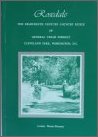
I found my way into the story by visitng the Historical Society of Washington DC, where I came upon the privately published and beautifully researched book by Louise Mann-Kenney, Rosedale: The Eighteenth Century Country Estate of General Uriah Forrest, Cleveland Park, Washington, D.C. (1989).

Some other relevant works include Historic Homes in Washington: Its Noted Men and Women by Mary S. Lockwood (NY: Belford Company, 1889); Cleveland Park, an Early Residential Neighborhood of the Nation's Capital by Grace Dunlop Peter and Joyce D. Southwick, and Old Georgetown on the Potomac by Henry Ridgely Evans, Washington DC 1933, which includes the author's personal memoir of his friendship with Agustín de Iturbide y Green, beginning as boys in Georgetown in the late 1860s.

Rosedale, Washington DC  Photo: C.M. Mayo
In addition, in the Historical Society of Washington DC's library and other Washingtonian libraries, I found several newspaper articles about Rosedale and the family, a few of which mentioned previously unknown details about the tangle with Maximilian von Habsburg.

[Pictured left is my snapshot taken in the winter of 2000, when Rosedale was still serving as a dormitory for the Youth for Understanding Foundation. It has since been painted a rich honey-yellow and is now a privately-owned residence within the Rosedale Conservancy.]

My research concluded a few years ago; no doubt these libraries have many new articles about Rosedale not listed here. There was a spate of publicity a decade ago, when Elián González, a Cuban boy whose custody was in dispute, found refuge at Rosedale, though, curiously, in not one of the many articles did I find any mention of Rosedale's history with another child whose custody was in dispute: Agustín de Iturbide y Green. (Really, I find that a headshaker.) Subsequently, a few years ago, Rosedale was in the local press again when a dedicated association of neighbors saved it and a small portion of the grounds-- now a community dog park-- from development. The Rosedale Conservancy-- the organization's website-- includes many photos and more information about Rosedale.

Herewith, a list of those older articles focussing on Rosedale:

+++In the Historical Society of Washington DC Library

November 16, 1947, "The President and Mrs Cleveland" by John Clagett Proctor, The Sunday Star

September 1, 1944, "Historic Landmarks of Cleveland Park," by John Clagett Proctor, The Sunday Star

And: a large map showing "Mrs Green" (which is Rosedale) on the Defences of Washington, Extract of Military Map of N.E. Virginia, War Department, 1865


+++In the Martin Luther King Library's Washintongtonia Room

*March 27, 1932, "A Relic of Antiquity," by Gilbert G. La Gorce, The Washington Post
This article is the most detailed. It claims that Alice Green was a youngest child, but this is incorrect (according to a Green family genealogy).

April 1933 (no date), "Phillips' Lease Famous Old Home" Washington Herald

March 23, 1941, "A Might-Have Been Empress Who Lives in Georgetown," by Jane McIlvane, Times-Herald
A very detailed article based on an interview with Agustín de Iturbide y Green's widow, Louise Kearney Iturbide. Erroneously states that upon their marriage in 1915 they lived in her family home, Quality Hill in Georgetown; in fact, the house was sold almost immediately after their marriage and they lived instead at the Pelham Apartments on P St NW, near Dupont Circle.

September 25, 1950 "Cleveland Park's Charm..." by George Kennedy, The Star
A mention with a little detail.

March 28, 1953, "Gen. Forrest's Home Unchaged in 160 years" by E.R. Noderrer, Times-Herald

August 19, 1958, "The Rambler... Visits his Favorite House" by George Kennedy, The Star
Another mention with a little detail.

Spring 1960, Cathedral's New property, Rosedale Estate, Associated with Capital';s Earliest History" by Elizabeth Coonley Faulkner, Cathedral Age


+++Georgetown Public Library's Peabody Room

A terrific resource-- here is where I sat down and read a first edition of Henry Ridgely Evans' memoir, Old Goergetown on the Potomac. They also have a complete collection of Evans' works-- he was a prolific writer, a 33rd Degree Mason, and an expert in magic and occult phenomena.


>>To listen to the podcast of my lecture at the Historical Society of Washington DC, click here.


Tuesday, April 12, 2011

On the Death of Maximilian: A rare Hungarian Newspaper Article from 1876


An eyewitness memoir by Dr Szender Ede, who served with the French in Mexico from 1865, and later had quite a bit to do with the aftermath, was published in a Hungarian newspaper in 1876, and has been translated into Spanish. Warning: it's not for the timid of stomach.

> You can read it here.

Yes, I hope to translate it into English soon.

Pictured left is my photo of Maximilian's temporary coffin, in Querétaro. You can see more of my photos from Querétaro here.

Next post: next Tuesday.

Tuesday, April 5, 2011

Carlota's Piano

So far readers have alerted me to a crystal flute, a saddle, a set of mirrors, and a diamond ring-- and now, Carlota's piano. A fun connection: writer John Randolph Bennett was writing to interview me about Dancing Chiva Literary Arts, my new venture in publishing, among other things, Maximiliana, and in his e-mail he wrote:

[When] I was a boy growing up in San Jose, CA, we used to buy sheet music as a store called Reid's Music. Somehow they had acquired Empress Carlotta's piano, and they displayed it on a dais in the center of their store. They called it the Empress Carlotta Grand. I remember it being ornate; it may have been painted a brassy gold. I think I got to play it once.

In response to further questioning:

"I just Googled 'Empress Carlotta Grande Piano' and found a listing in an auction house from 2010. This is how I remember the piano looking. Look at the golden color of that wood! Hard to imagine it sitting on a platform by the escalators in a big store in a shopping mall in San Jose."

Here's the result of that "google": M.S. Rau of New Orleans is offering the piano for sale for USD $225,000. From the on-line catalog:

Royal provenance and superior craftsmanship culminate in this highly important grand piano, owned by the Empress Carlota of Mexico and made by the famed London firm of Collard & Collard. The piano was given to the Empress by her brother-in-law, Emperor Franz Joseph of Austria, on the occasion of her 25th birthday in 1865.

The piano itself is a work of art. The body is crafted of luxurious birds-eye maple, polished to a sleek, smooth finish and complemented with scrolling gold gilt wood accents. Three shimmering gold gilt wood legs, hand-carved in the Rococo style, support the entire structure, which, despite its impressive size, seemingly floats in its space. Additional highlights include original ivory and ebony keys, original "certificate of authenticity" by Collard & Collard, and a plaque stating this magnificent instrument was a gift to the Empress.

This piano was housed in the Empress' private quarters in Chapultepec Castle, where she would often sit and play her favorite classical compositions. When the rule of the Empress and her husband, Emperor Maximillian I, ended in 1867, a few pieces of the castle's contents (including this piano) became the property of Mexican government officials.... CONTINUE READING


One of the very few liberties I took with historical facts in my novel, The Last Prince of the Mexican Empire, had to do, precisely, with this piano. For the chapter set in September of 1865, I wanted to introduce the two grandsons of the Emperor Iturbide, Salvador and Agustín (the prince of the novel's title), apart from their family, and show the strangeness of their having been brought into Maximilian's household. I set the scene for the two boys, one an adolescent, the other only 2 and 1/2, in Chapultepec Castle, the Imperial residence, where they come upon the piano. In fact, Salvador had already been taken to school in Paris-- but this was a small liberty, and worth taking for narrative integrity, I think. I also imagined the piano being dark--wrong I was! That will be corrected in the next edition.

I'll be on a brief blog vacation, so next the post will be on Tuesday April 19th.

If you'd like news about Dancing Chiva's forthcoming ebooks on Maximiliana, we'd love to have you join the mailing list. We hate spam, too, so the newsletter goes out only 5 - 6 times a year, and you can opt out at any time.

LinkWithin

Related Posts Plugin for WordPress, Blogger...